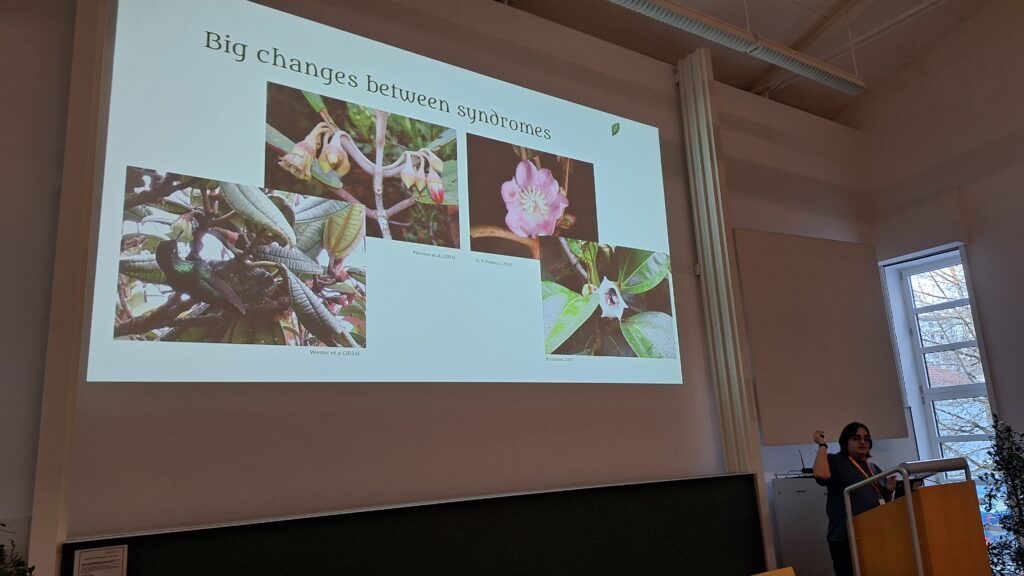
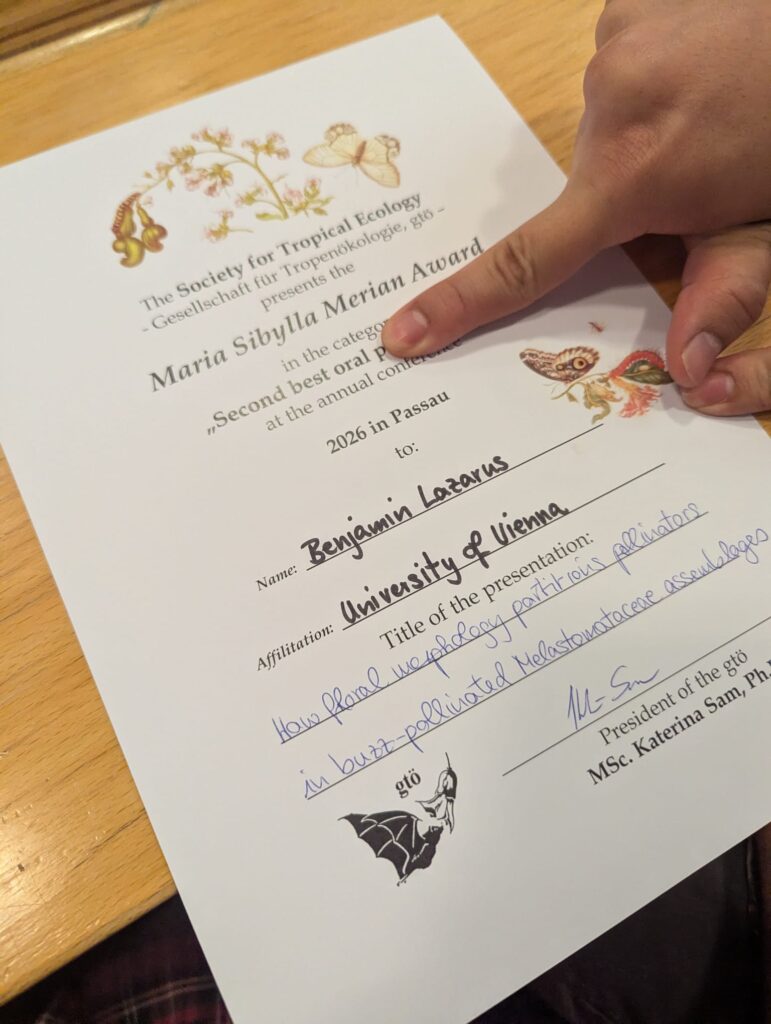
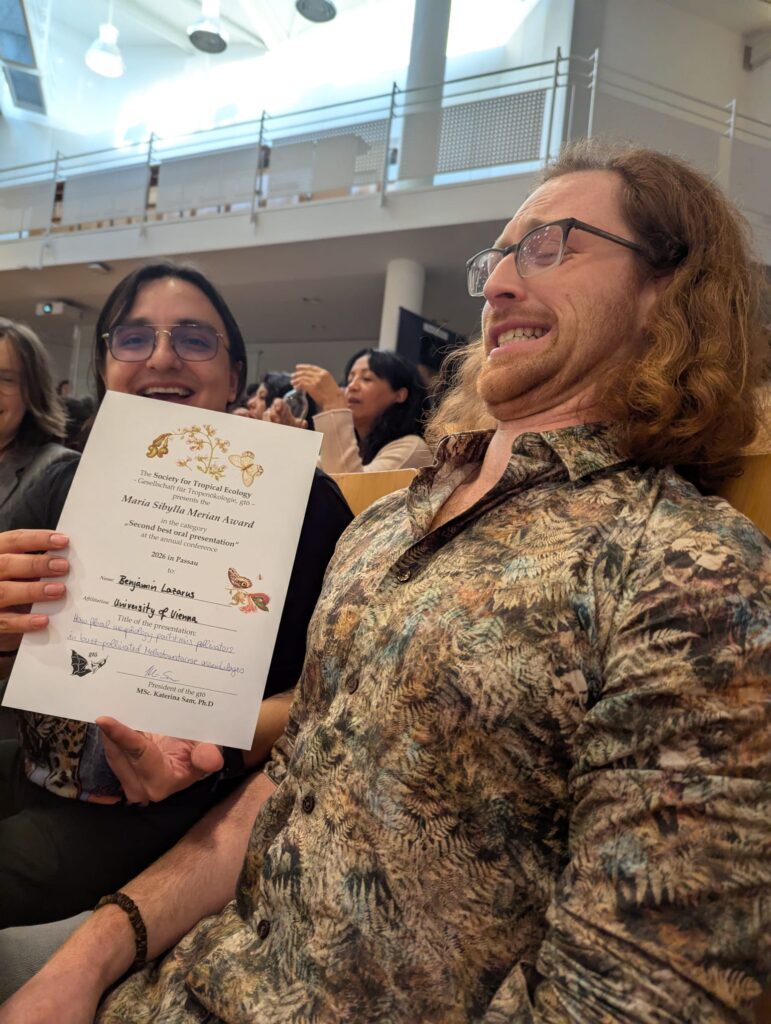
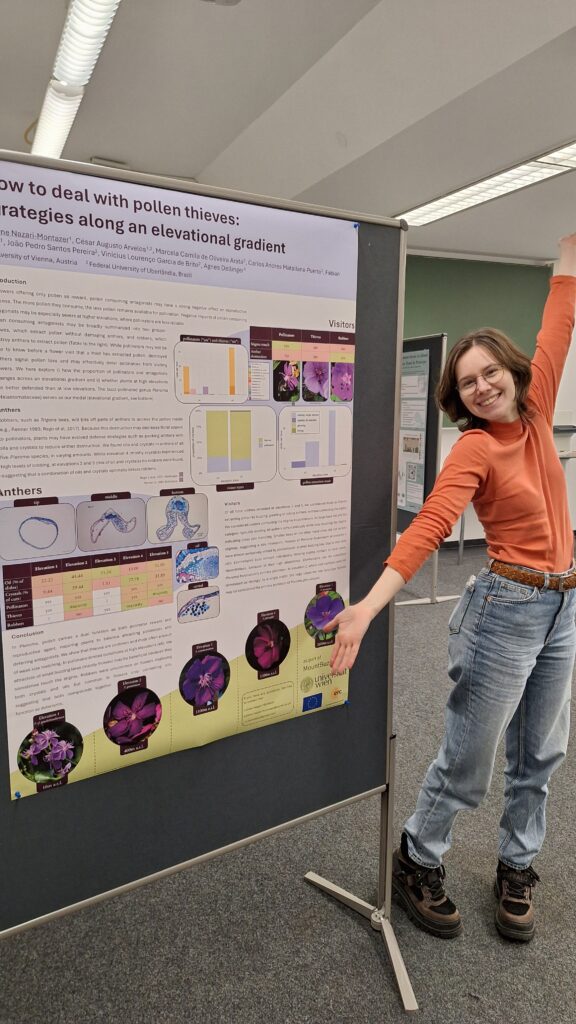
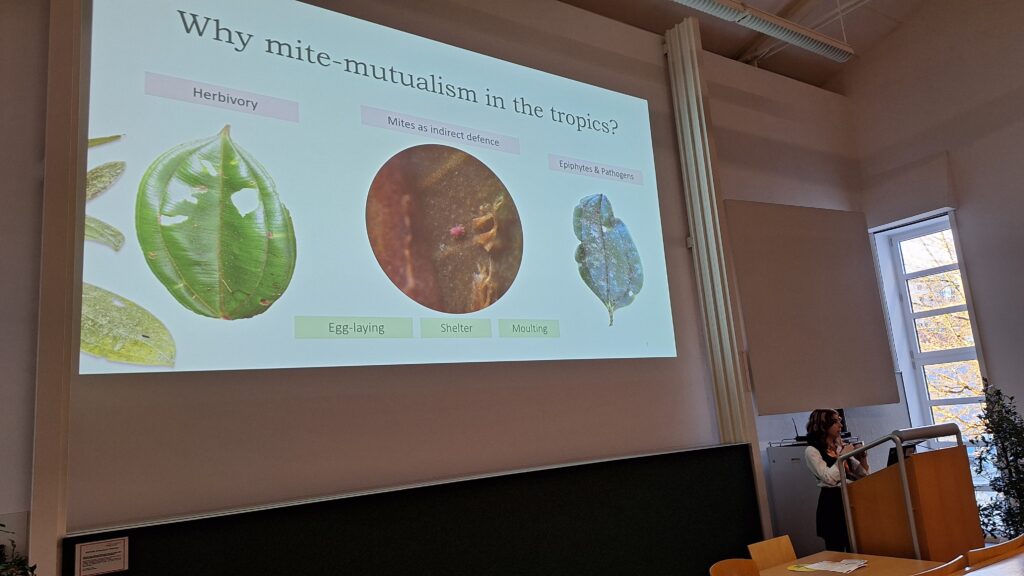
The PAIn lab had a great time at the ECTE/GTÖ conference in February 2026 in Passau, with four talks and a poster presenting the varied work we are doing! For Juliane and Viki, it was their first international scientific conference, with Juliane presenting exciting results from her MSc thesis on pollen robbing and theft (e.g., from bees that extract pollen but do not touch the stigma) in Melastomataceae flowers, and Viki rocking the stage presenting her MSc work on the ecology and evolution of mite domatia in the Melastomataceae tribe Pyxidantheae – spoiler: domatia do not only house mites in Pyxidantheae, but actually provide housing space to a wide diversity of arthropods! Viki’s work is important because mite domatia are often overlooked and especially poorly studied in the tropics – althought mites might fulfill important functions on leaves, such as predating on micro-herbivores or cleaning leaf surfaces off epiphytic fungi and algae. Johan presented his exciting results on the drivers of flower diversity in the Melastomataceae tribe Pyxidantheae – while pollination syndromes fall into distinct categories, Johan is digging deeper into the puzzle of how the many bee-pollinated species in the group evolved to become so diverse and scattered, proposing competition for buzzing bees as a major driver – stay tuned for more exciting discoveries and manuscripts from Johan very soon! Agnes took the opportunity to talk about major ecogeographic patterns of plant-pollinator interactions and the role of abiotic climatic niche shifts in driving evolutionary – and perhaps future! – pollinator shifts. Finally, Ben convinced the strict jury that buzz-pollination is awesome by talking about Melastomataceae pollination networks and the role of subtle floral traits and biomechanics in partitioning pollination niches – earning him a well-deserved second place for the Merian awards! Congratulations to the lab for doing such cool, fundamental research, presenting it well and – most importantly – having a lot of fun doing it!